
Guardians
of Turtle Island
Protecting Wild Rice
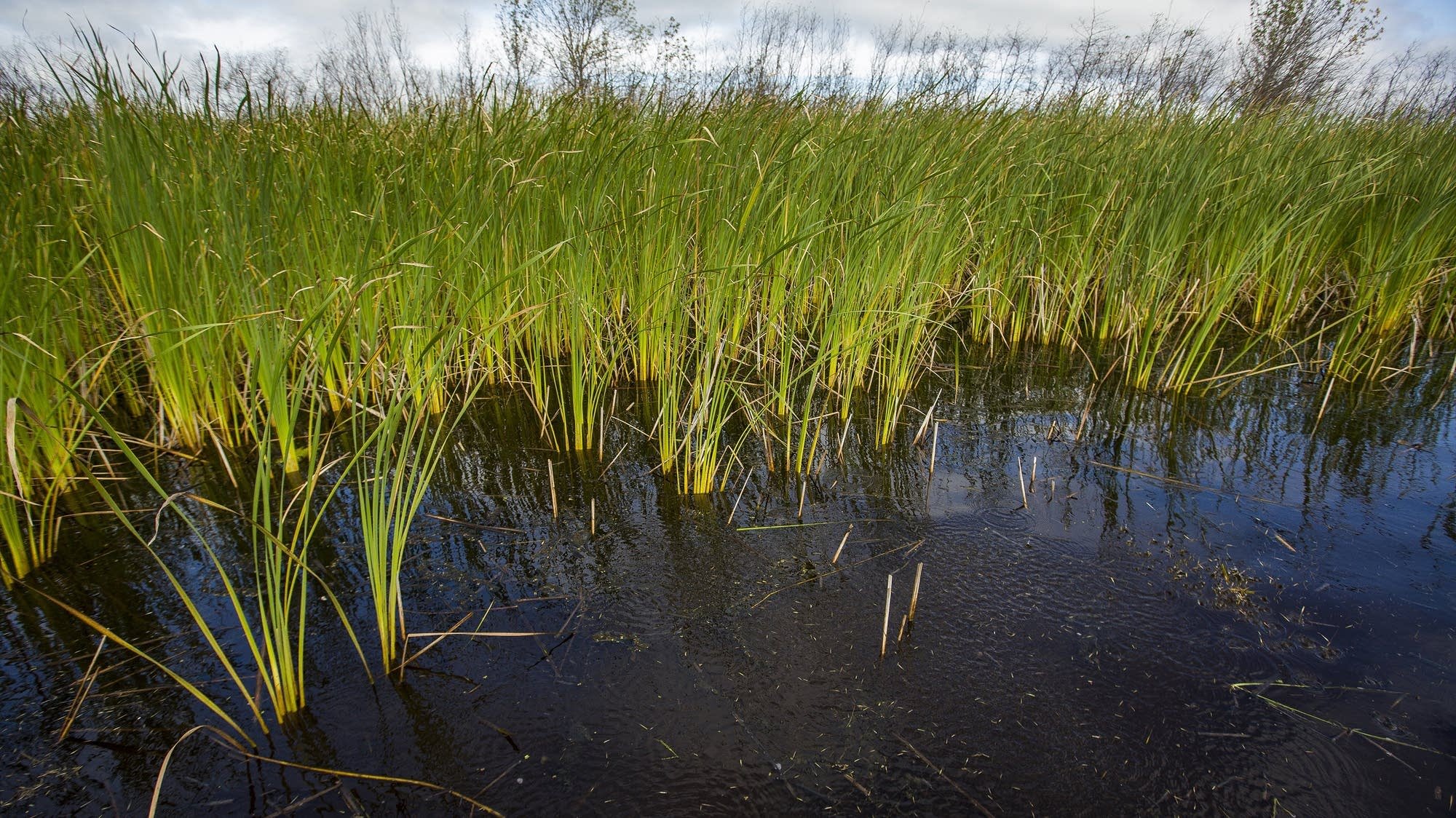
More than a thousand years ago, the Anishinaabe people inhabited the Atlantic coastline of Turtle Island (North America). They were graced with visits from eight Prophets who imparted seven Prophecies for them to adhere to, the third of which instructed them to journey westward until they discovered the location where "food grows on water." Upon reaching the Great Lakes area, Anishinaabe people came upon extensive beds of wild rice, known as Manoomin (pronounced Ma-nō-min). Anishinaabe settled in the Great Lakes region due to the presence of wild rice (Zizania), which thrives in lakes and thus fulfills the prophecy.
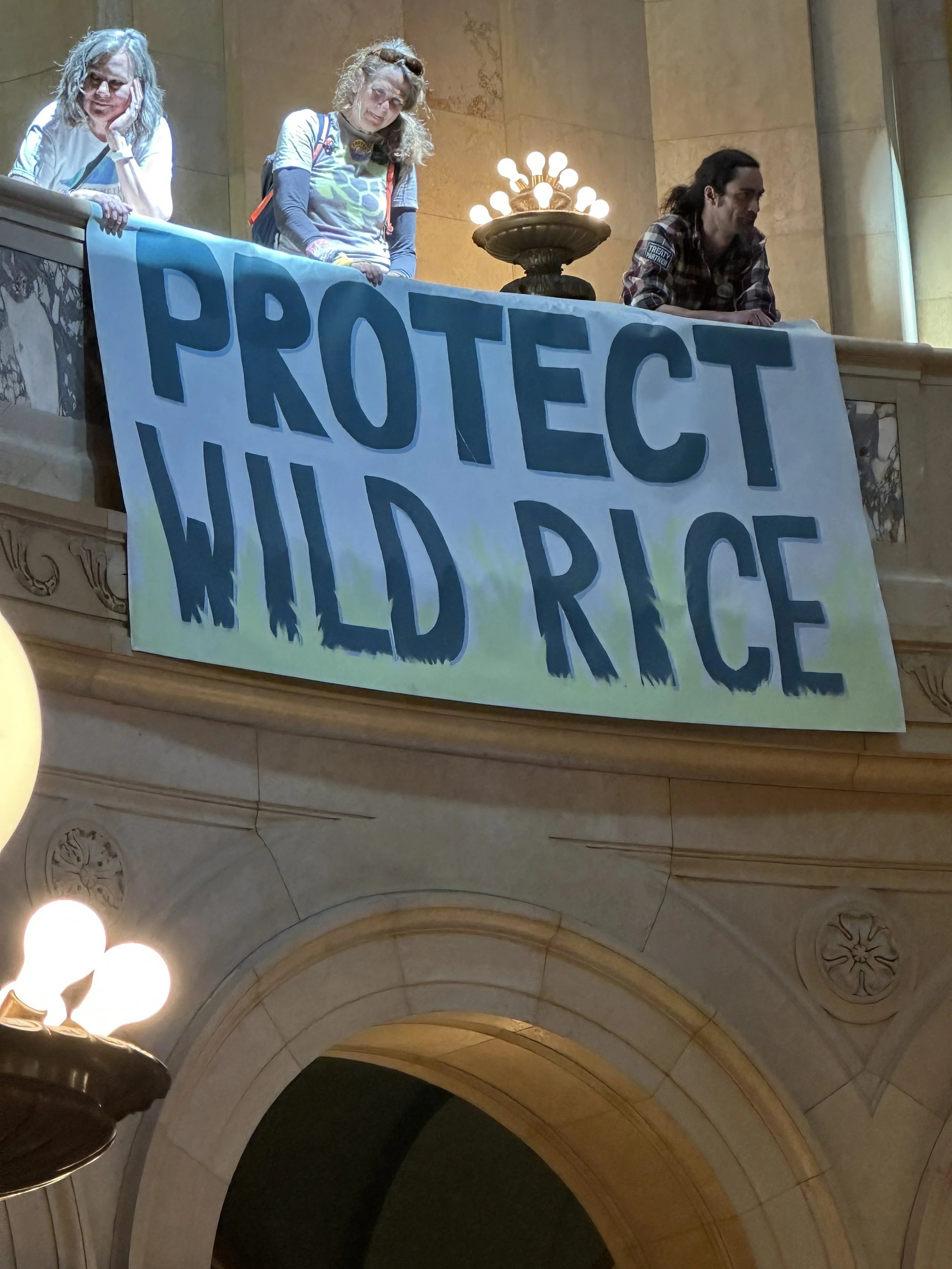
Wild Rice is the only grain native to North America. Referred to by the Anishinaabe as manoomin, which translates to the "good berry", it has become a vital element both spiritually and culturally, as well as in cultural staple in Anishinaabe and Midwesterns homes. Wild rice serves as a crucial food source for both humans and wildlife, including waterfowl. It is also utilized for medicinal purposes, where herbs are mixed with cooked rice to create poultices. Additionally, it is commonly offered as a spiritual gift during ceremonies, such as funerals. To show appreciation to the Gitchi Manitou (Great Spirit) for the blessing of wild rice, Anishinaabe present offerings of gratitude and act as mindful stewards of this precious resource.
The wild rice harvesting period spans from around August 15 to September 30, but it requires skill and understanding to determine when the rice is fully mature and ready for collection.
Wild rice is threatened by human activities. The pollution resulting from mining activities in northern Minnesota is arguably the most recognized issue. Both taconite mines and the proposed copper-nickel mines have the potential to release elevated levels of sulfate, leading to an ecological chain reaction that can devastate wild rice.
We must act now!
Mukwa Legislative Advocacy
Wild Rice
-
-
-
-
-
Change the Wild Rice Harvest Dates from statute into policy with Tribal Advisory Board
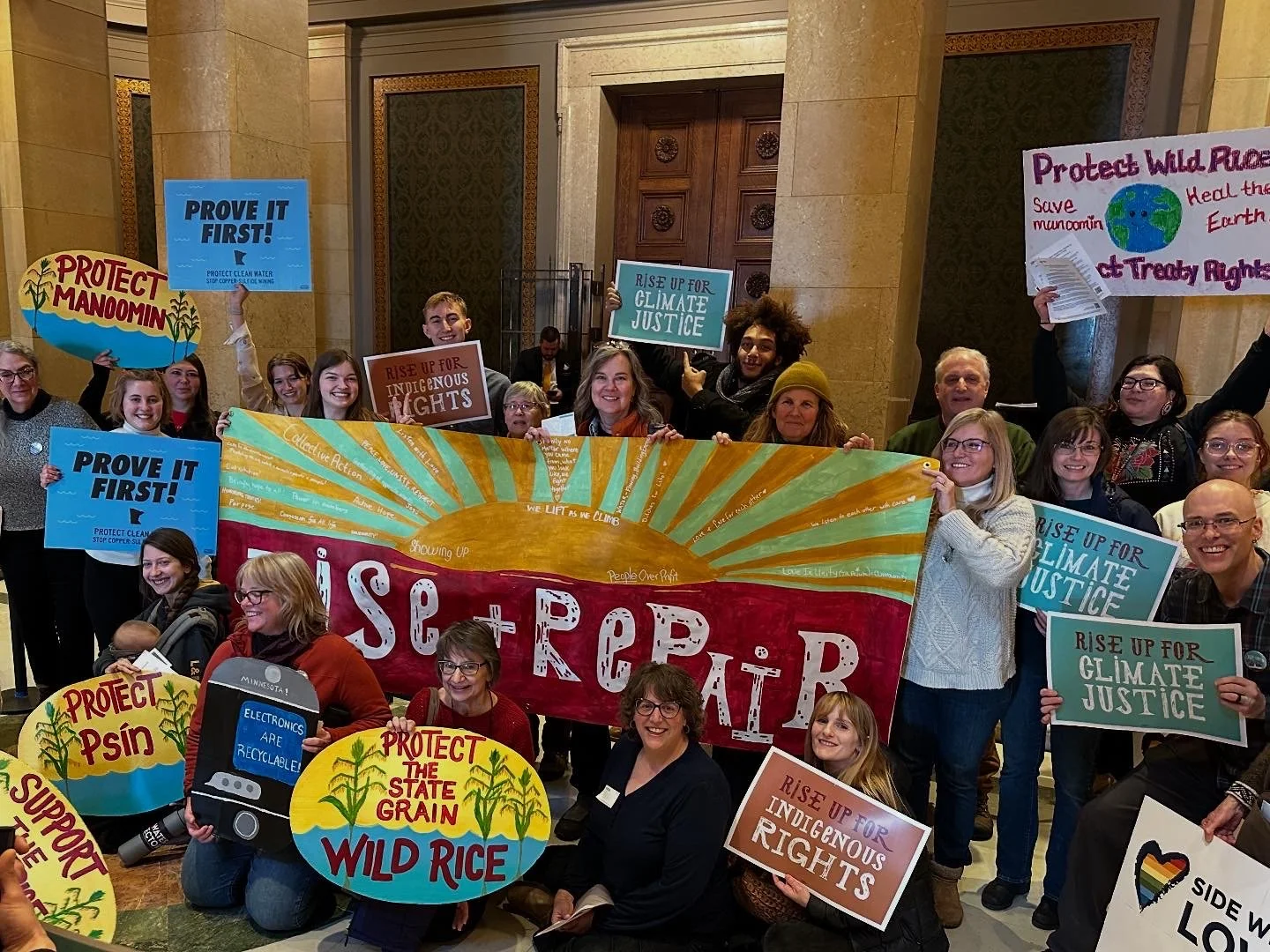
Grasping our history, mending connections, and shaping our shared future. Rise & Repair is a vibrant coalition of individuals and groups championing Indigenous rights and climate justice within Minnesota's legislative framework. Discover more by clicking here!
Exciting news! The Rise & Repair Alliance are proud to share that an we are working on an important bill to be introduced in the Minnesota State Congress to protect Manoomin (Ojibwe) / Psíŋ (Dakota) and its waters.

The Global Alliance for the Rights of Nature is a global network of organizations and individuals committed to the universal adoption and implementation of legal systems that recognize, respect and enforce “Rights of Nature”
Guardians of Turtle Island initiative is rooted in the Global Alliance For The Rights Of Nature, recently attended the 6th International Rights of Nature Tribunal, 2nd Session: “The Impacts of Mining and the Post-Extractivism Era”
Date: 28th February 2025
Location: University of Toronto, Law School, Toronto, Canada
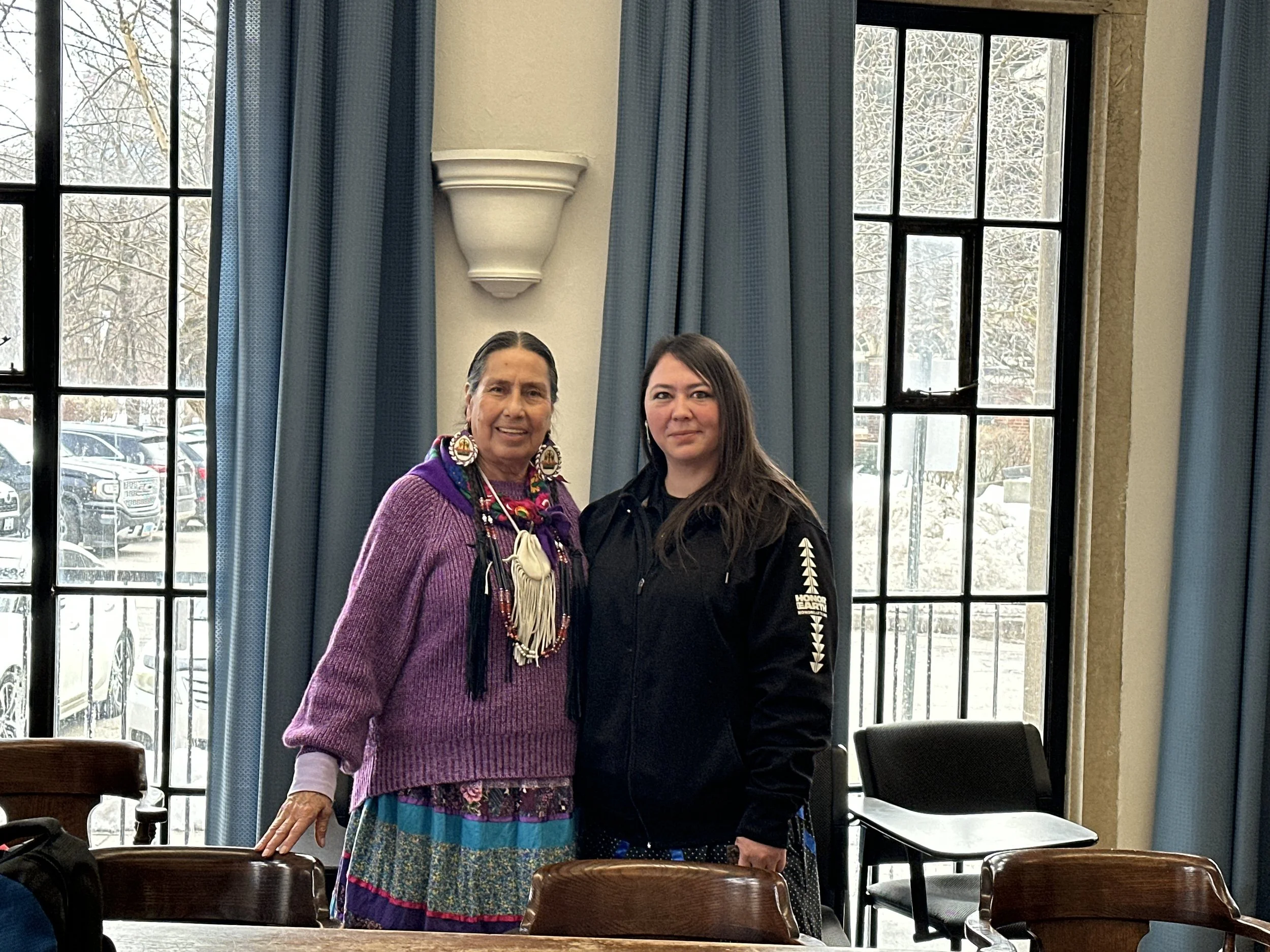
Resources:

The Eco Jurisprudence Monitor is an interactive online platform that compiles ecological jurisprudence initiatives globally as well as related resources for researchers, lawyers, policymakers, and activists. The rapid growth in the number of ecological law initiatives, as well as their varied legal and cultural expressions, presents an obstacle to those seeking to advance more ecocentric legal and governance systems to help enact the change needed to address looming environmental crises. Our intent is to broadly identify culturally distinct expressions of ecological jurisprudence and create common tools for analyzing them in order to foster global discussion and future ecological jurisprudence expressions, and to create a portal that inspires new research and frameworks.

Make sure to sign-up for the Minnesota Bear Den Emails.
Minnesota Native American Organizer call is open to call Indigenous folks in Minnesota sign-up here to get the zoom link, agenda and updates!

Mukwa relies on small grants and community donations for funding. Your support is crucial to our efforts, and your contributions can significantly impact our organizing initiatives.