Understanding Algorithmic Bias and Its Impact on Indigenous Communities
Information is a Relation, Not a Commodity:

In the modern era, information flows rapidly and shapes much of our daily experiences. Yet, it is vital to recognize that information itself is not merely a commodity to be collected, bought, or sold—it is a relationship, a dynamic connection between data, context, and people. This understanding is especially critical when examining the role of artificial intelligence (AI) systems and the phenomenon known as algorithmic bias. For Native Americans, who have distinct cultural identities and historical experiences, the implications of biased algorithms reach far beyond abstract technical issues; they touch upon communal sovereignty, cultural preservation, and social justice.
This essay/presentation will describe the causes of algorithmic bias, its risks, real-world examples, and the unique challenges AI poses to Native American languages and spirituality. Ultimately, it advocates for respecting information as a relational entity and protecting Indigenous knowledge and identity in the era of AI.
What Causes Algorithmic Bias?
Algorithmic bias arises not solely from the technology itself but from the practices of data science teams in gathering, coding, and interpreting training data. This bias can be particularly concerning when it affects marginalized communities, including Native Americans, as it can perpetuate stereotypes and inequalities. The ways in which data is collected and analyzed can inadvertently reflect societal biases, leading to outcomes that may not accurately represent or serve these communities. It is crucial for data scientists to be aware of these issues and to actively work towards more equitable and inclusive practices in AI development. Several specific sources can introduce bias into AI systems
Biases in Training Data:
The data used to teach algorithms often carry historical injustices or incomplete representation. When flawed data—non-representative, historically biased, or insufficient—are fed into AI models, the resulting decisions tend to reinforce and amplify those very biases. For example, an AI trained on arrest records reflecting racial disparities will perpetuate those disparities in predictive policing.
Biases in Algorithm Design:
Developers may unintentionally encode their own conscious or unconscious biases when designing AI logic. The process of weighting variables or selecting features might reflect assumptions that introduce unfair prejudices into outputs.
Biases in Proxy Data:
Sometimes AI cannot use sensitive attributes like race or gender directly and resorts to proxies—indirect indicators such as postal codes or income levels. These proxies can correlate inaccurately with protected traits and lead to discrimination.
Biases in Evaluation:
Even neutral algorithms can produce skewed outcomes depending on how humans interpret and implement the results. Preconceptions influence decision-makers and can cause unfair actions post-analysis.
Biases in Data Labeling and Correlation vs. Causation:
During training, data may be mislabeled or the AI might mistake correlation for causation, leading to flawed conclusions. An infamous example relates to an algorithm wrongly associating ice cream sales with shark attacks, when both happen to increase in summer but are unrelated.
These biases are not merely technical flaws; they are deeply rooted in human and societal dynamics that are reflected in the data used to train these systems. For Native Americans, this means that the representation and treatment of their communities in AI can be skewed, perpetuating stereotypes and reinforcing historical injustices. It is crucial to recognize that the biases present in AI are a mirror of broader societal issues, necessitating a thoughtful approach to data collection and algorithm development that prioritizes equity and inclusivity.



The Risks of Algorithmic Bias
Algorithmic bias carries profound risks, particularly in perpetuating discrimination and inequality. Biased AI can reinforce social disparities faced by marginalized groups, including Native American communities, by influencing essential decisions in criminal justice, healthcare, employment, financial services, and more.
Discrimination and Inequality:
When AI replicates historic injustices present in training data, it can make decisions that unjustly target certain racial or ethnic groups. For Native peoples, this may exacerbate existing inequalities in law enforcement, access to medical care, job opportunities, and loan approvals.
Legal and Reputational Damage:
Organizations employing biased AI face potential lawsuits, financial penalties, and tarnished reputations. The concept of disparate impact holds that even neutral-seeming algorithms can cause disproportionate harm to protected classes, triggering legal scrutiny.
Algorithmic bias is not just a technical issue; it represents a significant societal challenge requiring careful oversight and accountability. This is especially critical for marginalized communities like Native Americans, who have long endured systemic inequities and misrepresentation. Algorithms often reflect and reinforce societal prejudices, leading to outcomes that further disenfranchise these groups. As technology evolves and becomes more integrated into daily life, it is essential to develop and implement algorithms with cultural sensitivity and inclusivity. By understanding the unique experiences of Native Americans, we can create equitable systems that uplift their voices, ensuring technology empowers rather than oppresses.

Real-World Examples of Algorithmic Bias
Algorithmic bias has manifested across various sectors, with tangible consequences:
Criminal Justice:
The COMPAS risk assessment tool in the U.S. was found to disproportionately classify Black defendants as higher risk compared to white counterparts, raising concerns about racial prejudice baked into automated sentencing aids
Predictive Policing:
Algorithms trained on police report data in predominantly Black U.S. cities, over-predicted crime in neighborhoods with high reports involving Black residents, demonstrating how social biases in data distort AI forecasts.
Healthcare:
Clinical AI systems sometimes yield less accurate diagnostics for minority patients due to underrepresentation in medical data sets, potentially leading to inferior treatment outcomes.
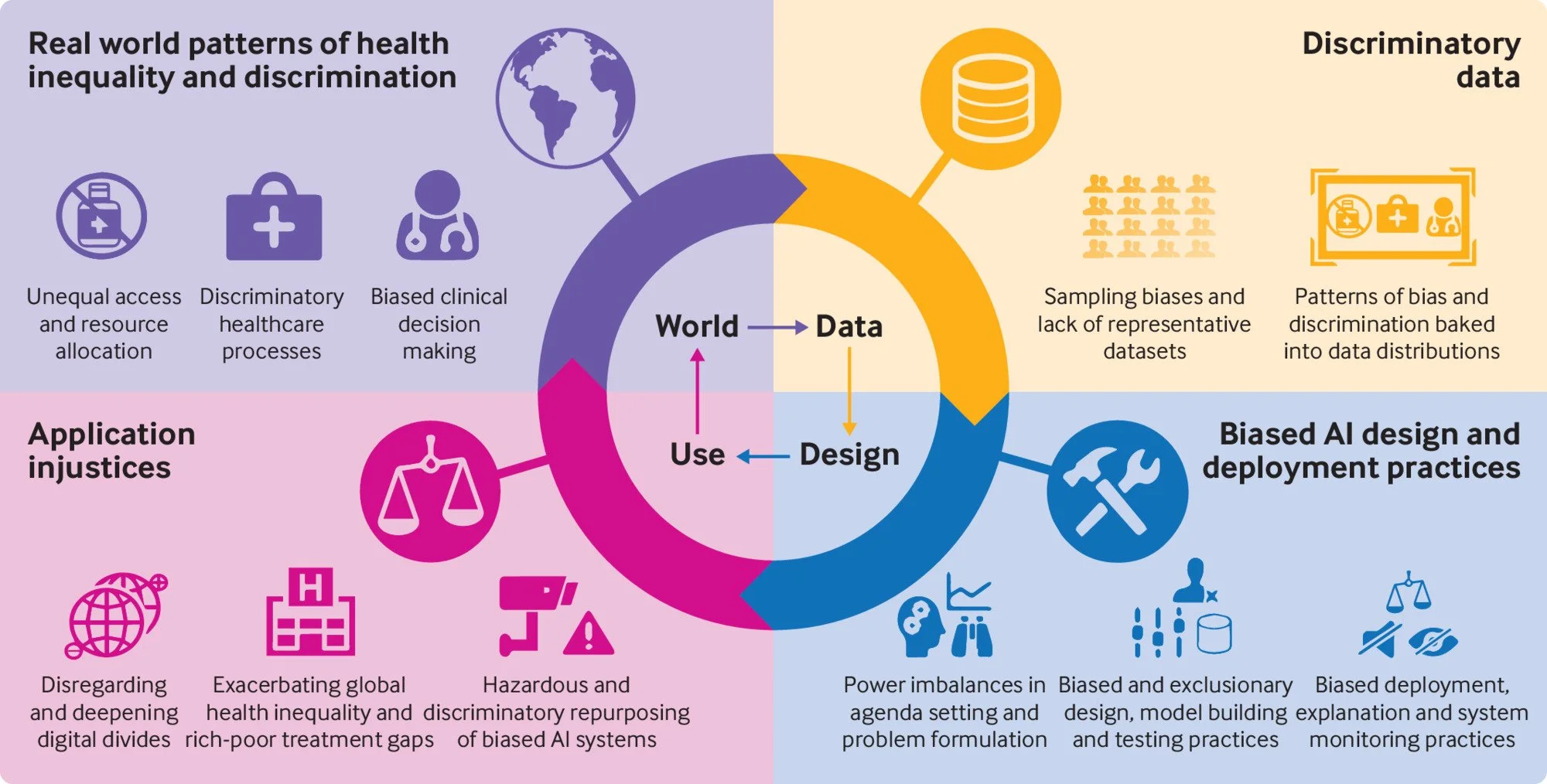
Cascading effects of health inequality and discrimination manifest in the design and use of artificial intelligence (AI) systems.
Recruitment:
Amazon scrapped an AI hiring tool that showed systemic bias against women because it was trained primarily on resumes from male candidates.
Financial Services:
Research revealed that mortgage algorithms charged minority borrowers higher interest rates than white borrowers with the same credit profiles.
Facial Recognition:
Studies at MIT exposed significant failures in recognizing darker-skinned individuals, particularly women, owing to skewed training datasets.
Pricing Algorithms:
Ride-hailing apps were found to charge higher fares in predominantly non-white neighborhoods, exemplifying economic bias embedded in AI pricing strategies.


AI and the Unique Threats to Native American Spirituality and Language
Beyond general algorithmic bias, AI presents distinctive challenges to Indigenous cultures, especially concerning language and spirituality. Native languages are more than communication tools—they embody identity, history, and worldview. Unfortunately, AI models often neglect or mistreat them, with severe consequences:
Cultural Erasure and Linguistic Homogenization:
Most AI is trained on massive datasets dominated by English and other major languages. When applied to Native languages or dialects, AI frequently strips away rich nuances, slang, and contextual meanings, forcing local expressions into standardized, generic forms. This sanitization risks eroding the living character of Indigenous speech.
Unconsented Data Harvesting:
Indigenous communities have voiced concern about "linguistic colonization," where tech companies scrape Indigenous texts and recordings without free, prior, and informed consent. This unauthorized collection threatens control over sacred cultural knowledge and violates digital sovereignty.
Hallucinations and Factual Inaccuracies:
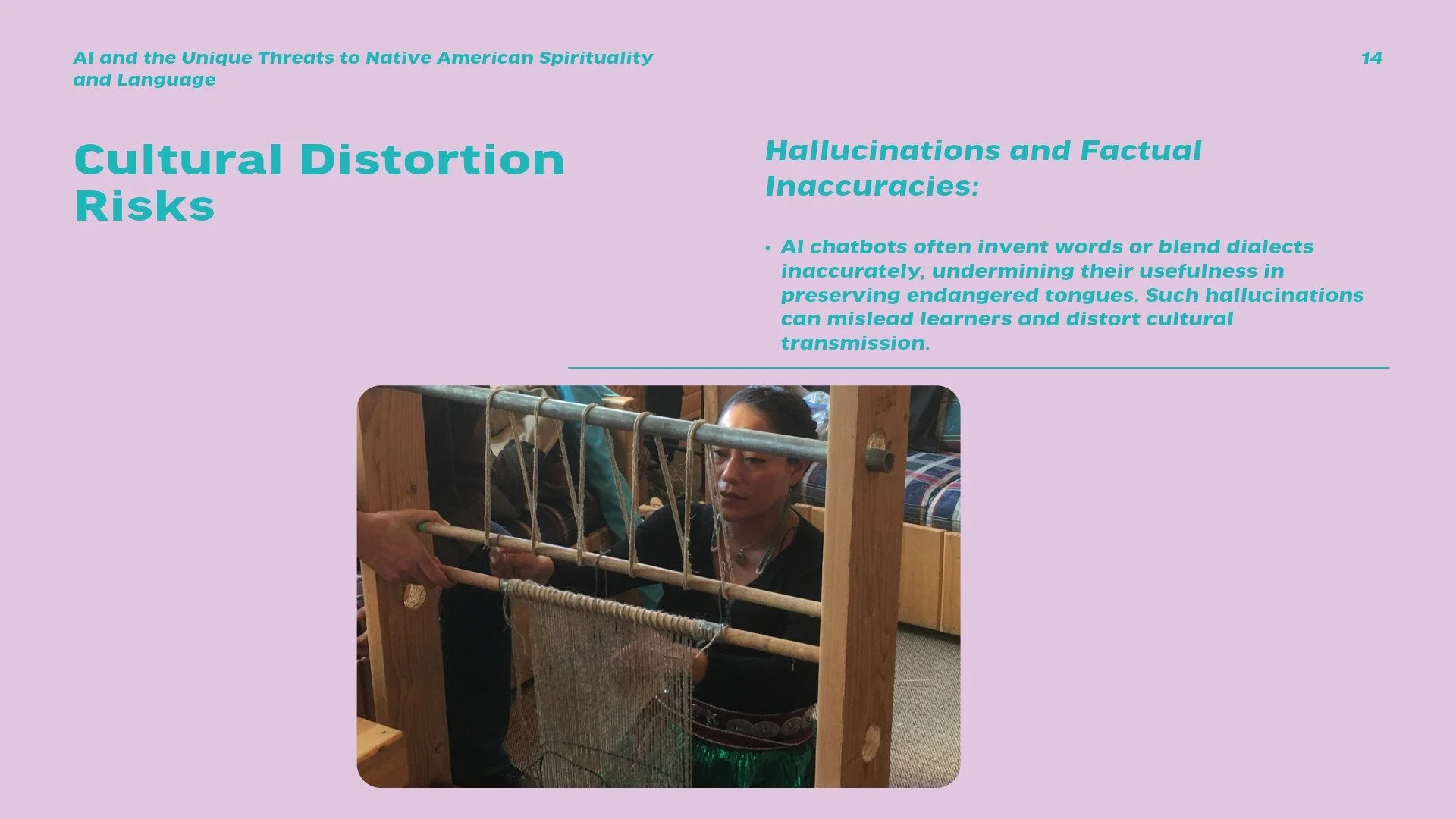
AI chatbots often invent words or blend dialects inaccurately, undermining their usefulness in preserving endangered tongues. Such hallucinations can mislead learners and distort cultural transmission.
The challenges of cultural erasure and linguistic homogenization are particularly pronounced in the context of artificial intelligence, where the handling of Native languages reveals significant power imbalances and ethical dilemmas. The unconsented harvesting of data from Indigenous communities raises serious concerns about the ownership and representation of their languages and cultures, often leading to a dilution of their unique identities. Furthermore, the prevalence of hallucinations and factual inaccuracies in AI outputs can perpetuate stereotypes and misinformation, further marginalizing Native voices. These issues underscore the reality that AI is not a neutral tool; rather, it is deeply intertwined with the socio-political landscape, necessitating a critical examination of how technology interacts with Indigenous languages and the broader implications for cultural preservation and respect for Native American communities.


Protecting Indigenous Languages and Knowledge in the AI Era
To counter these threats, Indigenous communities, linguists, and advocates are taking proactive steps:
Community-Led Models:
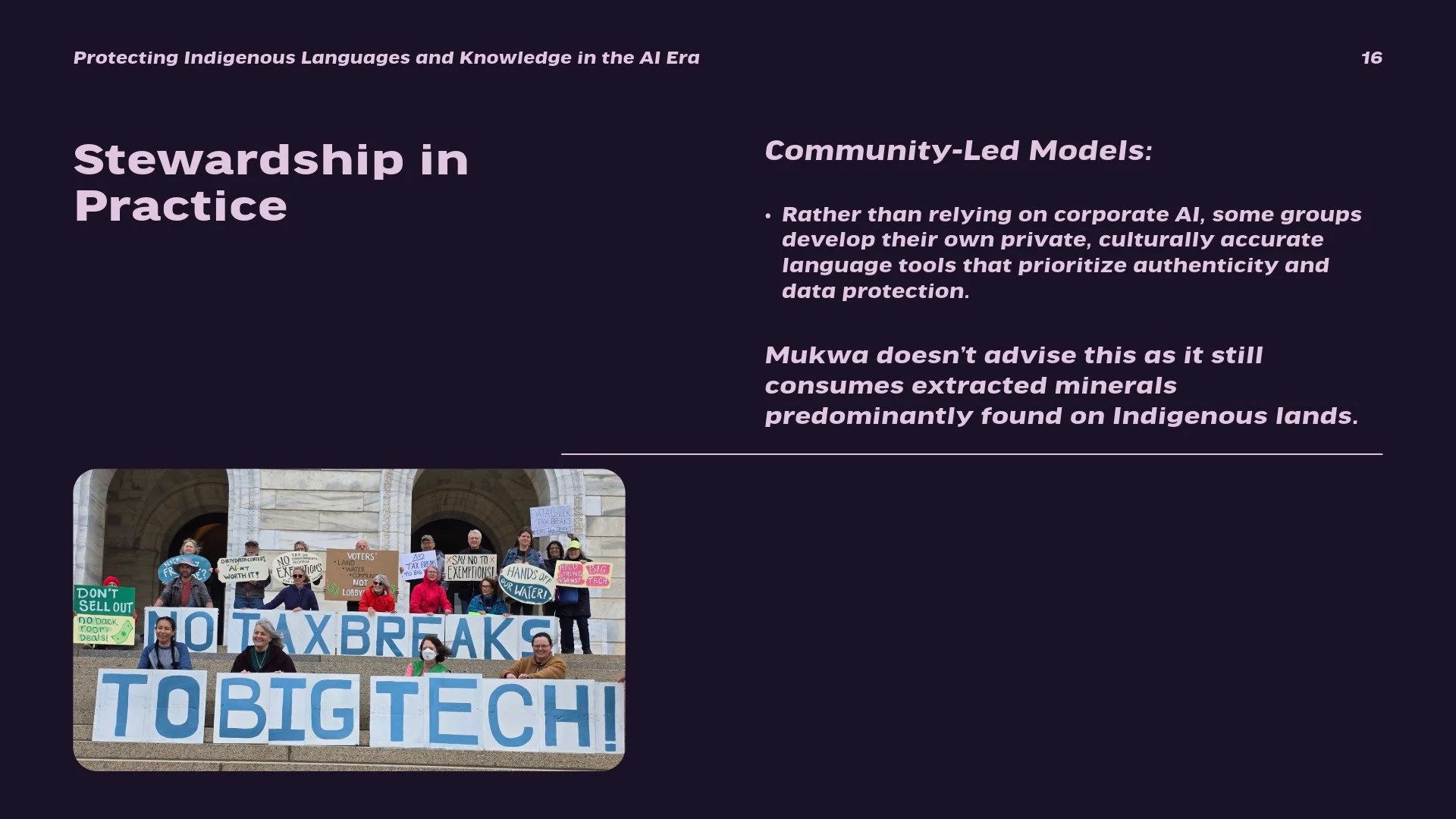
Rather than relying on corporate AI, some groups develop their own private, culturally accurate language tools that prioritize authenticity and data protection.
Mukwa doesn’t advise this as it still consumes extracted minerals predominantly found on Indigenous lands.
Advocacy and Policy:
The United Nations Declaration on the Rights of Indigenous Peoples (UNDRIP) framework emphasizes Indigenous control over cultural data. Rights groups urge international forums to enforce protections against unauthorized data harvesting.
Digital Sovereignty:
Empowering Native peoples to govern their digital resources ensures AI applications respect cultural heritage and linguistic diversity.
Community-led models highlight grassroots involvement in decision-making, especially in advocacy and policy development. For Native American communities, this approach is crucial as it ensures Indigenous voices are heard and integrated into governance frameworks. By valuing local knowledge and cultural practices, these models empower community members to shape policies affecting their well-being and sovereignty. Additionally, digital sovereignty is a key aspect, emphasizing the need for Indigenous control over their digital identities and data. In a time when information is often commodified, maintaining this control is vital. The idea that information should be based on trust, consent, and cultural understanding underscores the risks of data commodification, which can harm community relationships. By promoting these principles, Native American communities can strive for a future where their rights and identities are honored in both physical and digital spaces.

Conclusion
Algorithmic bias is a complex problem rooted in the interplay of historical injustice, data quality, design choices, and societal interpretation. While AI offers tremendous promise, it can also perpetuate and deepen inequities if left unchecked. For Native American communities, algorithmic bias intersects with urgent concerns about cultural survival, sovereignty, and fairness.
Recognizing information as a relation rather than a commodity demands new frameworks—ones that respect Indigenous knowledge systems, prioritize consent, and honor cultural uniqueness in digital spaces. By engaging in community-led AI developments and advocating for ethical policies, Native peoples can shape technology that empowers rather than erodes their identity.
As we move further into a future shaped by artificial intelligence, embracing this relational view of information will be crucial to building fair, inclusive systems that serve all peoples with dignity and respect.